
Strengthening Organic Coconut Sugar at the Source: PT Nesia’s Socialization Program with 207 Farmers
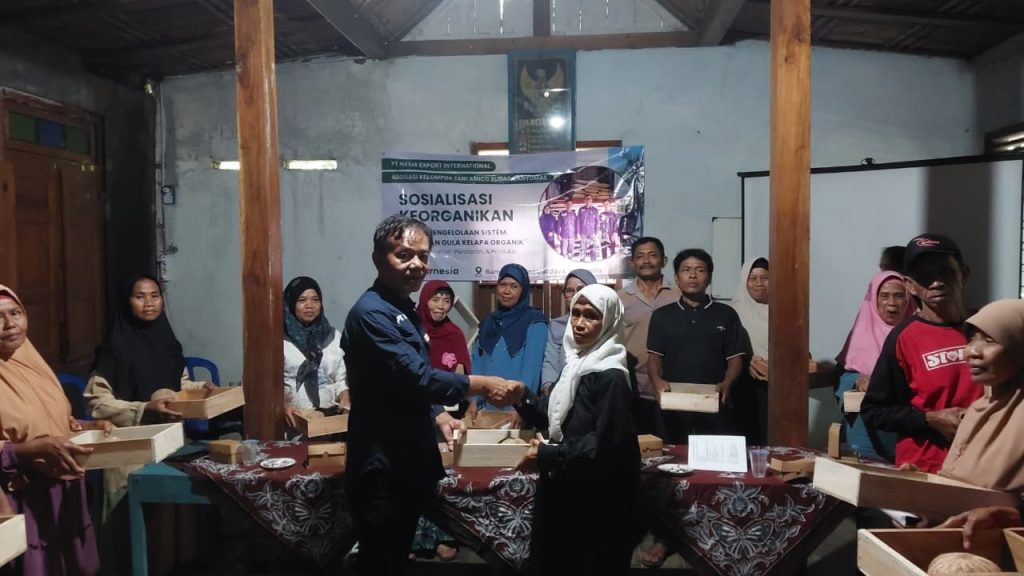
Organic certification is more than just a label. It represents a culture, a responsibility, and a commitment that must be consistently applied at every level of farming. With this understanding, PT Nesia Export International organized a comprehensive socialization program on organic farming systems with a total of 207 farmers from Desa Kemawi and Desa Tanggeran. The goal of this initiative was to provide farmers with deeper knowledge on how to manage land, use equipment properly, and carry out production processes that meet international organic standards.
The gathering brought together two farming communities that play an important role in the coconut sugar supply chain. Desa Kemawi contributed 185 farmers, many of whom have been involved in coconut sugar production for generations. Desa Tanggeran, though smaller in size, sent 22 dedicated farmers who share the same heritage and determination to keep their traditions alive while embracing modern organic requirements.
This program was designed around three main areas: land management, equipment handling, and production techniques. These areas were chosen because they represent the backbone of an organic farming system. If one of these aspects is weak, certification and product integrity are at risk. PT Nesia facilitated the session in a way that encouraged participation, storytelling, and shared problem solving, rather than simply delivering instructions.
The first focus was land management. Farmers were reminded that the heart of organic production begins with healthy soil and healthy trees. Discussions covered the avoidance of synthetic fertilizers and pesticides, the importance of biodiversity, and practical methods for improving soil fertility such as composting and organic mulching. Farmers were also taught how to observe the health of their coconut trees and how small interventions can prevent larger problems. The message was clear: organic farming is not just about the final sugar but about respecting the entire ecosystem that makes it possible.
The second focus was on equipment. Tools such as pongkor, sieves, and coconut processing equipment are not minor details but central to ensuring product quality. Farmers learned the importance of cleaning tools regularly, maintaining them properly, and understanding how hygiene practices connect their local production to global markets. When nectar is collected in clean containers, when sieves are kept free of residue, and when processing tools are used correctly, the sugar produced gains both consistency and credibility. Farmers were encouraged to view their tools not as simple objects but as vital instruments of professionalism.
The third area was production. Farmers were guided step by step on how to collect nectar, cook it into sugar, and sieve it into clean granules that meet international standards. Trainers emphasized that small details, such as boiling temperature and container cleanliness, make a big difference in the final product. The sessions also highlighted the importance of record keeping, traceability, and accountability, which are essential for maintaining certification.
The atmosphere during the socialization was lively. Farmers from Kemawi shared stories of their daily routines, such as how they balance long hours of tapping blossoms with household responsibilities. Farmers from Tanggeran asked practical questions about how to adapt traditional practices to fit organic requirements. The trainers responded with respect, showing that local traditions can be harmonized with global standards. This approach created pride among farmers, who began to see themselves not only as local producers but as participants in an international movement toward healthier and more sustainable food.
One of the strongest messages of the program was that organic certification is a collective effort. It cannot be maintained by individual farmers working in isolation. Every member of the community must follow the same standards, because one mistake can affect the credibility of the entire group. By gathering 207 farmers in a single forum, PT Nesia emphasized unity, shared responsibility, and the importance of looking out for one another. Farmers left the meeting with a stronger sense of solidarity and the understanding that their success is intertwined.
The benefits of the program extend beyond certification. Farmers discovered new methods for caring for their environment, from composting to organic pest control. Some expressed excitement about teaching these practices to their children, ensuring that future generations continue the organic farming legacy. The knowledge gained from the socialization will influence not only their farms but also their families and their community life.
For PT Nesia, this initiative is an essential investment. International buyers demand transparency and traceability. By training farmers directly, PT Nesia ensures that every shipment of coconut sugar comes from producers who are knowledgeable, skilled, and committed to organic practices. This creates confidence for buyers and positions PT Nesia as more than an exporter. It positions the company as a partner that uplifts farming communities while delivering reliable products to the global market.
Farmers themselves expressed gratitude for the program. Many said they felt recognized and valued. They were happy that a company not only buys their sugar but also invests in their growth. Some mentioned that they had never before been invited to discuss farming at such a detailed level. Others expressed relief that their voices were heard, their challenges understood, and their questions answered. This sense of inclusion deepened their trust in PT Nesia and motivated them to improve their practices.
The long-term impact of this socialization will continue to unfold as farmers apply what they learned. As they adopt better land management practices, maintain their tools with greater care, and refine their sugar with improved consistency, the entire supply chain becomes stronger. Every batch of sugar they produce will carry not only certification but also the pride of being created by empowered farmers.
This initiative is also aligned with global sustainability goals. By encouraging fair trade, protecting rural livelihoods, and promoting environmentally friendly farming, PT Nesia contributes to broader international objectives such as ending poverty, ensuring food security, and promoting responsible consumption. Buyers who choose PT Nesia’s organic coconut sugar are not only purchasing a product but also joining a larger movement for sustainable development.
The involvement of both Kemawi and Tanggeran farmers made this program even more significant. Kemawi, with its long history of coconut sugar production, showed how tradition and innovation can work together. Tanggeran, with its smaller group, demonstrated how even modest communities can achieve high standards when given the right knowledge and support. Together, the two villages formed a powerful symbol of unity and resilience.
In conclusion, PT Nesia’s socialization with 207 farmers from Desa Kemawi and Desa Tanggeran marks an important step in building a reliable and sustainable organic coconut sugar supply chain. By focusing on land management, equipment care, and production practices, the program gave farmers the skills and confidence they need to maintain certification and improve their livelihoods. It showed that sustainability is not created in isolation but through cooperation, knowledge, and respect for both people and the environment.
The story of this program is not only about sugar. It is about people, about communities that now stand stronger, and about the connection between local farmers and global buyers. When PT Nesia invests in farmers, it invests in a future where every grain of coconut sugar carries authenticity, sustainability, and hope.